

Best Practices in Vaccine Lot Release: A Regulator's Workshop on Ensuring product availability and continuous supply.
INTRODUCTION
Almost two years after the outbreak of the COVID 19 pandemic, only about 6% of the population in Africa was fully vaccinated. In comparison, over 70% of high-income countries had already vaccinated more than 40% of their people.
The difficulties in accessing sufficient vaccine supplies were a wake-up call for Africa to increase local vaccine production in the medium to long term.
In April 2021, the African Union (AU) launched the African Vaccine Manufacturing Partnership with the aim of moving away from dependency and towards health sovereignty. In addition to strengthening pharmaceutical production, there was an urgent need to support pharmaceutical regulation in Africa. A stringent registration process, quality control of health products, continuous market surveillance and pharmacovigilance are required to ensure access to safe, effective and quality assured locally produced products. Both national and regional regulatory authorities need to be strengthened, as well as the future African Medicines Agency (AMA) and the Africa Medicines Regulatory Harmonisation Initiative (AMRH). Today, no regulatory authority can work in isolation - without regulatory cooperation and harmonisation of pharmaceutical regulations, access to medicines and vaccines cannot be ensured.
The German Development Cooperation with its implementing organisations the German national metrology institute PTB and GIZ, worked closely with the Paul Ehrlich Institute (PEI) to support African regulatory authorities, especially in the field of vaccine regulation.
A study tour of the regulatory authorities from Ghana, Rwanda, Senegal and South Africa, AMRH and representatives of EAC, ECOWAS and SADC to the German PEI was planned, during which an initial exchange on vaccine regulation and cooperation opportunities was discussed.
OBJECTIVES
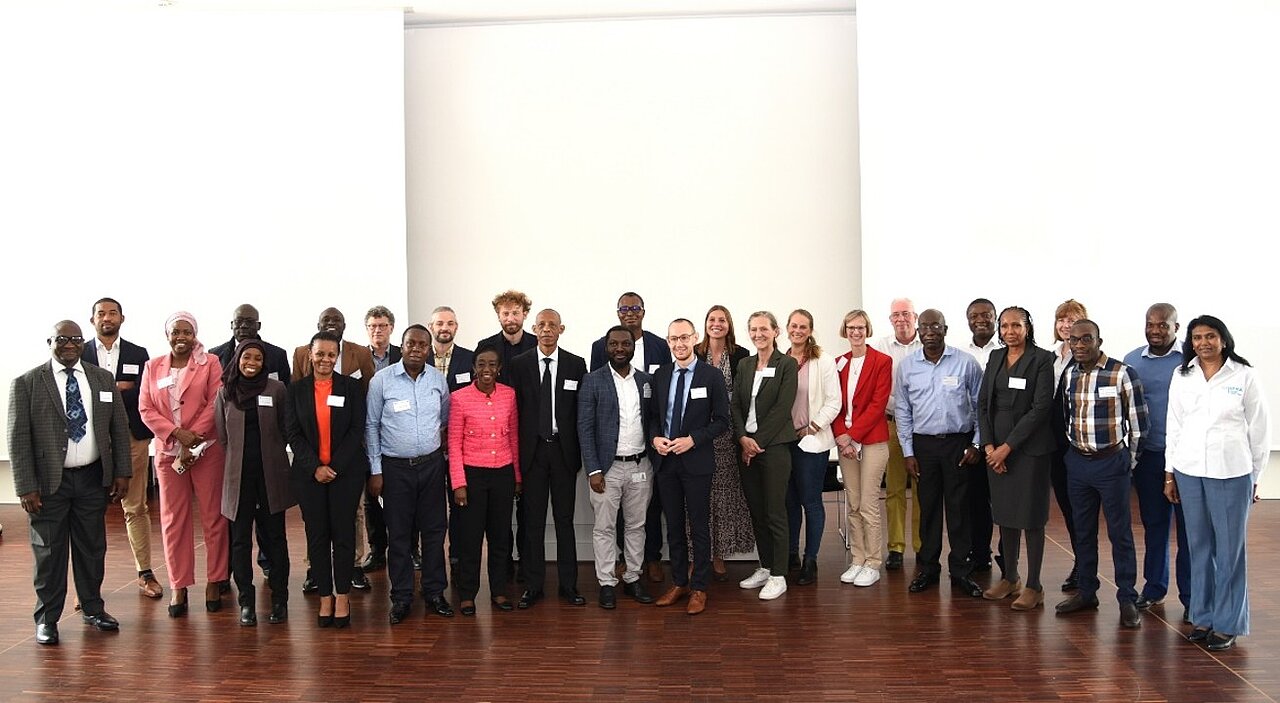
The aim was to establish a network between vaccine regulatory authorities from Germany, Ghana, Rwanda, Senegal and South Africa, improve the understanding of the respective vaccine regulatory systems, as well as increase cooperation and mutual learning in the field of vaccine regulation.
The German PEI shared information on the German and European regulatory system for vaccines while the African regulators presented their current systems in vaccine regulation and need for upgrade.
- Exchange of expertise, discussion on challenges and best practices.
- Improved knowledge in technical session on the topics of
- lot release systems for vaccines and
- GMP inspection procedures and licencing of vaccine manufacturers.
A workplan on further joint activities (e.g. trainings, technical advice, further study trips) was developed.
PARTICIPANTS
It was planned to invite three participants from each of the respective regulatory authorities: the heads of the regulatory authorities (Ghana FDA, Rwanda FDA, Senegal FDA, SAHPRA) and two technical staff involved in lot release and inspection, in total 12 participants
It was planned to invite three participants from the African Medicines Regulatory Harmonisation (AMRH) initiative
It was planned to invite one representative from the RECs EAC, ECOWAS and SADC, where the four national regulatory authorities are located
In total 18 participants
LOGISTICS
Timeline: 9 - 12 May 2022, on-site meeting at Paul-Ehrlich-Institute (PEI), Langen, Germany and 13 May 2022 on-site meeting at German Federal Ministry for Economic Cooperation and Development (BMZ), Bonn, Germany
Laboratory visits at PEI depending on negative Covid-19 PCR Test results.
Two moderators from PTB and GIZ facilitated the meetings.
SPONSORSHIP & FUNDING
The event was organised and funded by PTB and PEI
PTB CONTACT
Anna Reinhardt, Project Coordinator, anna.reinhardt@ptb.de
Lisa Köhler, Project Assistant, lisa.koehler@ptb.de