

Best Practices in Vaccine Lot Release: A Regulator's Workshop on Ensuring product availability and continuous supply
BACKGROUND
The African Medicines Regulatory Harmonization (AMRH) initiative was launched in 2009 to improve the regulatory systems for medicines in Africa and ensure that safe, effective, and quality medicines are available to patients. One of the key components of the AMRH initiative is the African Medicines Quality Forum (AMQF), which was established in 2015 to promote information sharing, capacity building, and harmonization of medicines quality standards in Africa.
Vaccines are a critical component of the healthcare system, and their availability and continuous supply are essential to prevent and control infectious diseases. Vaccine lot release is an important step in the vaccine regulatory oversight that ensures the safety, efficacy, and quality of vaccines and hence their safety and efficacy are maintained, before they are distributed and administered to healthy populations.
Effective lot release practices are essential to ensure product availability and continuous supply of vaccines in Africa. However, lot release practices can also present challenges to vaccine manufacturers and regulators in the region. The requirements for lot release of vaccines including testing methods may vary between different countries and regulatory authorities, which can lead to delays and inconsistencies in lot release practices. In addition, the growing demand for vaccines and the need for rapid response to public health emergencies can put pressure on lot release function to ensure the timely availability of vaccines.
Therefore, it is essential to promote best practices in vaccine lot release that ensure product availability and continuous supply in Africa. The AMQF, through the AMRH initiative, can play a crucial role in this effort by facilitating collaboration among regulatory authorities and promoting harmonization of lot release practices across the continent.
The German Development Cooperation, with its implementing organizations, the German national metrology institute PTB and Gesellschaft für Internationale Zusammenarbeit (GIZ), works closely with the Paul-Ehrlich-Institut (PEI) to support African regulatory authorities, especially in the field of vaccine regulation.
The Egyptian Drug Authority (EDA) shared information on their risk-based approach for lot release testing and their respective guideline and system. In addition, a tour through the EDA laboratory for biological products and vaccine manufacturing facility in Egypt was planned for the last day.
STUDY TOUR & WORKSHOP
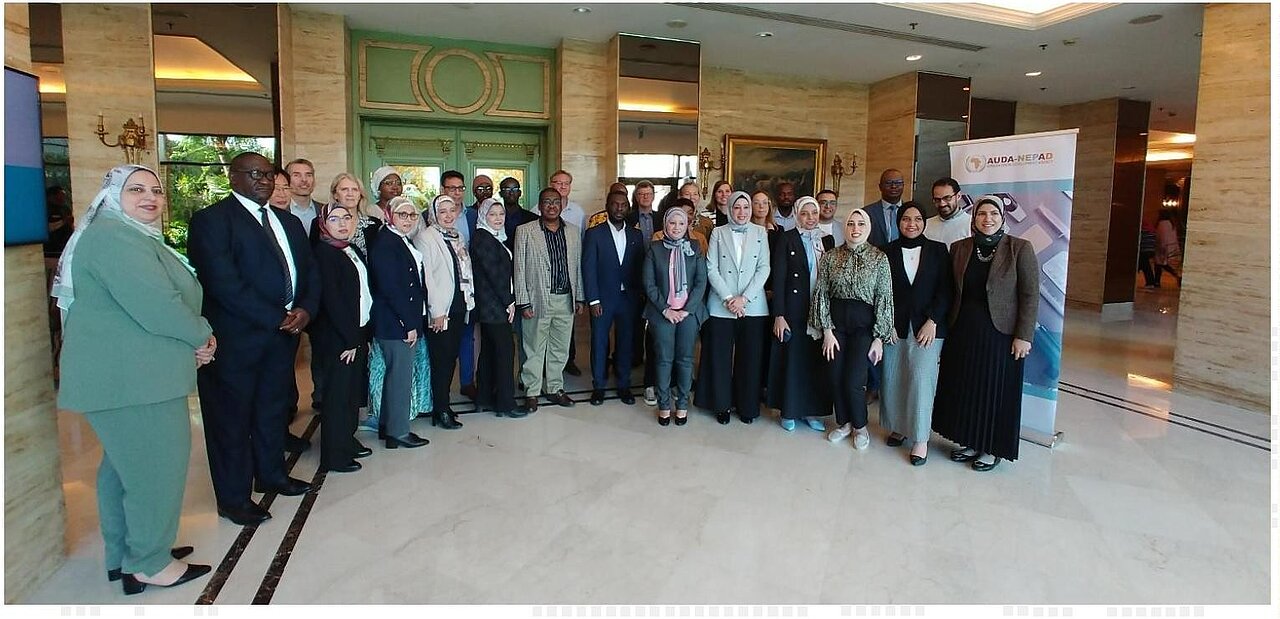
From 27 November to 1 December 2023, a workshop was held in Cairo, Egypt, to provide regulators in the vaccine area with a comprehensive understanding of best practices in vaccine lot release and their impact on product availability and continuous supply.
AGENDA
27 – 29 November: Workshop
30 November: Visit to EDA-biological laboratories and vaccine manufacturing facilities in Egypt
01 December: AMQF Vaccine Sub-Committee Meeting
OBJECTIVE
The general objective was to provide regulators with a comprehensive understanding of best practices in vaccine lot release and their impact on product availability and continuous supply.
Specific objectives included:
- Discussing the required outlines to develop a general policy for NRAs on vaccine lot release using a risk-based approach
- Enhancing the capacity of regulators to assess and evaluate lot release data, including lot summary protocols, testing methods, and annual product quality reviews, with a focus on registration, life cycle management, and deviations
- Information sharing by the Egyptian Drug Authority (EDA) regarding their risk-based approach, guidelines, and system for lot release testing
PARTICIPANTS
2 Representatives (from NRAs/NCL) in total who participated in previous regulators’ platform meetings and/or are AMQF- vaccine subcommittee member countries (Botswana, Egypt, Ghana, Nigeria, Rwanda, Senegal, South Africa, Tanzania).
The participants were either the permanent Vaccine Subcommittee member and/or a person responsible for the lot release of vaccines in the respective country. The workshop language was English.
Experts from PEI, PTB, WHO, EDQM, Observers: GIZ, USP/PQM+.
Representatives from the AMRH Initiative.
AMQF Leadership.
SPONSORSHIP & FUNDING
The event was organised and funded by PTB and PEI.
PTB CONTACT
Anna Reinhardt, Project Coordinator, anna.reinhardt@ptb.de
Lisa Köhler, Project Assistant, lisa.koehler@ptb.de